
The Art of Not Knowing
Clear Decision Making Series: Part I

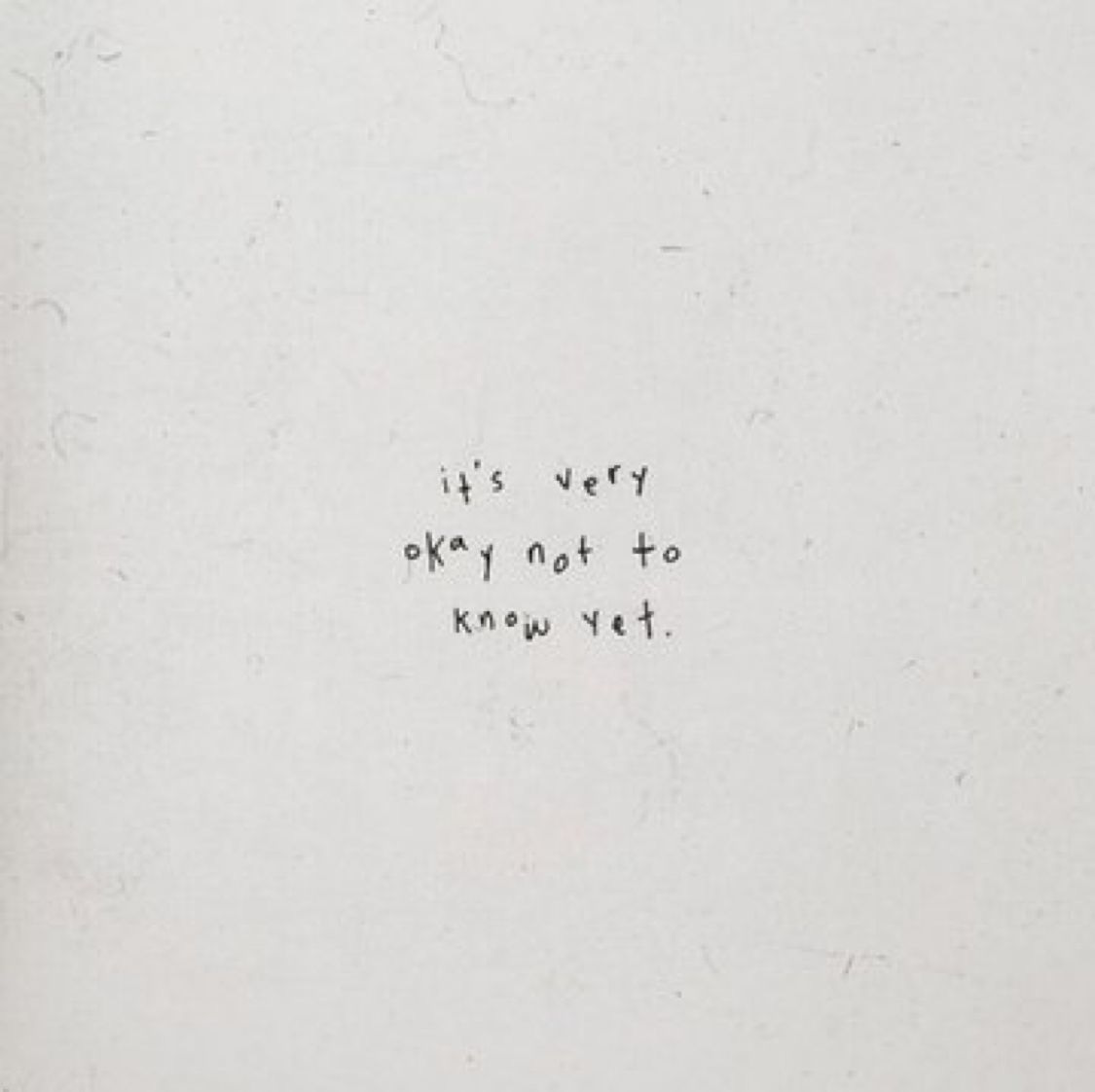
I recently worked with a coaching client around gaining clarity on decision-making, and the first thing that we addressed was not knowing. The predominant attitude in workplaces is an aversion to not knowing. People really hate not knowing. We come to meetings and dread not knowing how to answer a question. We push and stress for a clear way forward on a project even when there is none. When there is no black and white solution to a problem — and in the era of pandemic life, this is a frequent issue — we try to avoid the feeling of not knowing how to proceed, racking our brains for an answer, analyzing all the different options or course of actions, planning out different scenarios, and most of the time taking our best guess. Of all fears and anxieties I observed and experienced myself, not knowing is perhaps the most uncomfortable.
I’ve been exploring this more in-depth the last few weeks because a lot of people in my life have either made big shifts or are in the process of making them, or want to make them but aren’t confident in their decision making. So the question I’ve been digging into is, “How do I make a decision and how do I know it’s a good one?”
What I see are four components to decision-making which I’ll be writing about in a multi-part series:
Not knowing
Discernment
Clarity
Trust
So clear decision making starts with not knowing.
The problem is that the ego hates to not know, and there are a host of barriers that get in the way of not knowing that the ego has adopted. These can be a variety of historical experiences that continue to impact us, and they crystalize in our unconscious inner critic messages with an unconscious “it’s not okay to not know because….”
our parents humiliated us for not knowing
our parents were annoyed or frustrated when we didn’t know how to do something
we were embarrassed at school for not knowing an answer to a question
we didn’t know a lot of things during our adolescence and it sucked
we were made fun of for not getting a concept
we experienced a sense of overwhelm when we didn’t know how to do a task
the list goes on…
In the workplace, these kinds of messages translate into subtle behaviors that really impact outcomes:
a team member doesn’t admit to not knowing how to do a project
a team member won’t speak up during a meeting because they don’t want to be seen as not knowing
a team member hesitates to speak up during a client presentation because they don’t want to be asked a question they don’t know the answer to
a team member over-analyzes and over-prepares to try to be able to respond to every possible question
a leader won’t admit to not knowing and makes a decision without gathering all the necessary data or intel
a leader doesn’t allow for the natural development of a project or allow for other possibilities to arise because they rush a decision
The ego dynamic at play here is the avoidance of vulnerability and wanting to perceived in a particular way.
The ego wants things to be certain, secure, controlled….and not knowing is anything but that. It also wants to be seen as highly competent, so it will tend not to slow down enough to even admit to not knowing.
However, if we can not only tolerate not knowing but welcome it, we can begin to truly access discernment and clarity, and generally a different kind of intelligence that is not solely rationale and logical.
The ego relies on a calculator-like mind, and its capacity is confined to what it historically knows. So it is not able to access intuition, spontaneity, or dynamism. It also can’t access clarity, because it is inherently muddied with inner critic messages, pressures, and anxieties.
Accessing another level of intelligence is the realm of Steve Jobs and other visionaries, but the approach can be used at any level of management. Taking the space to sit with not knowing, to gather and consider what is known and unknown, and allowing an idea or solution to arise unlocks a dynamism that everyone can feel. We subconsciously recognize when an idea is a good one because it has a flavor of spontaneity and genius to it, a freshness to its character that is distinctive and clearly different from a stale idea from the ordinary mind.
How do we access this kind of intelligence?
The natural follow-up question here is how do we tap into this? The first order of business is to explore exactly what barriers keep us from accessing this space of not knowing.
Are we uncomfortable with not knowing?
What historical experiences have been painful when we have not knowing
What pressures come into our inner landscape when we are faced with not knowing?
What inner critic messages do we have about not knowing?
How do you avoid the vulnerability of not knowing?
Just making this ego dynamic conscious begins to open up space within ourselves to not know. As an exercise, you might journal your own dynamics or watch throughout the day for moments when not knowing might arise and you automatically shut it down. See if you can recognize what happened or what inner programming caused you to constrict the experience of not knowing? What if you did the opposite and allowed the full experience?
From there, we can really begin the process of accessing a kind of inner wisdom and guidance, which I will tackle in Part II of this series :)
If you found this content helpful, please feel free to subscribe to this Substack, where I will be primarily focusing on understanding ego dynamics and how they impact the workplace, and how to free ourselves from the limitations of the ego. If you’d like to explore coaching or corporate training opportunities, please reach out to me at timothy@egolessleaders.com.